Historic Discovery Amidst Devastation
Wildfires that recently swept through the south of France have led to an unexpected and significant discovery: a hidden cache of around 400 World War II-era shells and munitions in the village of Le Porge. This find has added a complex layer to the challenges faced by local authorities and residents in the aftermath of the blazes.
Initially, during the height of the fires, numerous explosions were heard, which responders first attributed to exploding gas cylinders. However, subsequent investigations suggest that these blasts were likely caused by the intense heat detonating the buried World War II explosives. Martial Zaninetti, the Mayor of Le Porge, recounted to France Info that over 100 explosions occurred on the second night of the fire, describing the sound as akin to “the sound of war.”
Unforeseen Consequences of a Natural Disaster
The presence of these historical armaments was entirely unknown to the local municipality. Mayor Zaninetti revealed that while ammunition depots were buried within the land, their exact locations were not documented or remembered. The explosions were not contained, with some shells reportedly flying “to the right, to the left,” and one even penetrating a house. This unforeseen peril underscored the unpredictable nature of the disaster.
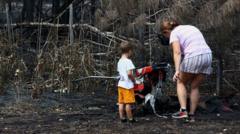
Following the discovery, demining operations were promptly initiated to ensure the safety of the community. These efforts have largely enabled residents to return to their homes, though certain areas within Le Porge remain restricted as a precautionary measure. The wildfires themselves caused extensive damage, destroying more than 180 houses in the vicinity, leaving many families to sift through the charred remains of their properties.
Scope of the Munitions
Reports from French media indicate that the unearthed historical weapons comprise both German and French armaments. The cache includes various types of munitions, such as mortar shells and anti-tank shells, highlighting the intensity and widespread nature of the conflict in the region during World War II. The sheer volume and variety of the explosives found suggest a significant, albeit forgotten, military presence in the area decades ago.
The discovery comes after a protracted period of wildfires that ravaged the Gironde area for approximately ten days. While the fires have now been brought under control, the environmental and societal impact is profound. On Monday, French Prime Minister Sébastien Lecornu expressed gratitude to the firefighters for their tireless efforts, stating that “France has stood firm in the face of an unprecedented crisis.” He noted that the battle against the fires was transitioning into a “new phase” in the Gironde region, with evacuated individuals gradually being allowed to return to their residences.
Wider European Context of Wildfires
The wildfires in France are part of a broader pattern of intense blazes that have affected various parts of Europe over the past two weeks. Spain, alongside France, has been particularly hard-hit, leading to the evacuation of more than 330,000 people across the continent. France experienced some of the most severe impacts, with an estimated 42,000 hectares burnt in its southwest region. This scale of destruction ranks among the largest forest fires seen in the country since World War II.
The events in Le Porge serve as a stark reminder of the long-lasting legacies of historical conflicts, which can resurface under unexpected circumstances decades later. The convergence of a natural disaster with unexploded ordnance presented a unique and dangerous challenge, requiring immediate and specialized intervention to protect the public and facilitate recovery efforts.