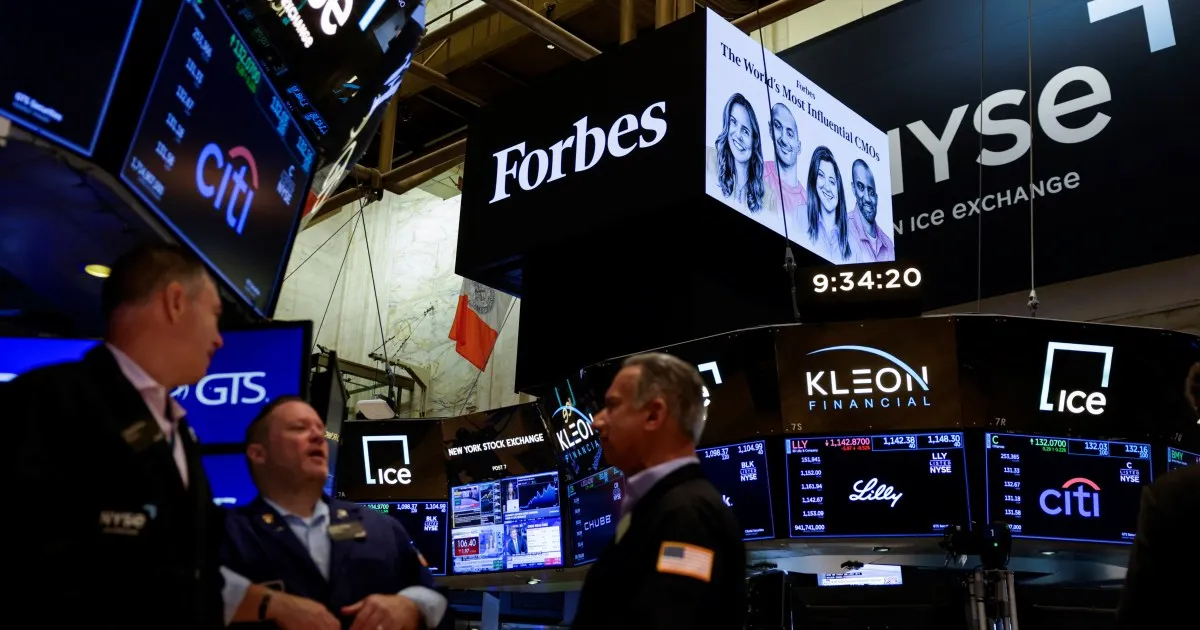
Market Performance: US Stocks Surge, Oil Prices Fluctuate
On Monday, the United States stock market demonstrated significant upward momentum, bringing key indices close to their all-time peak performance. This surge occurred against a backdrop of ambiguous signals concerning ongoing diplomatic efforts to address the conflict involving the U.S., Israel, and Iran. The S&P 500 index saw a notable increase of 1.5 percent, positioning it just below its historical closing record of 7,620.90, which was established on June 2. Similarly, the technology-heavy Nasdaq Composite experienced a robust gain of 2.1 percent, placing it 4.3 percent shy of its own record high of 27,093.90, also recorded on June 2. The Dow Jones Industrial Average, which comprises 30 prominent companies, advanced by 1.3 percent, setting a new record high of 53,178.41.
A primary driver of this market rally was the strong performance of several major technology corporations, often referred to as the “Magnificent Seven.” With the exception of Apple, all companies within this group registered substantial gains. Meta Platforms, the parent company of Facebook, saw its stock rise by 6 percent. Microsoft, Amazon, and Alphabet each experienced increases ranging from 4.4 percent to 4.9 percent. Chip manufacturing giant Nvidia recorded a 2.9 percent uptick, while electric vehicle producer Tesla climbed by 3.5 percent. This broad-based positive trend extended into after-hours trading, with futures linked to the S&P 500 showing an additional rise exceeding 0.2 percent.
Melissa Brown, Managing Director of Investment Decision Research at SimCorp, expressed a degree of surprise regarding the extent of the market's upward movement. She noted, "I am extremely surprised by the magnitude of the rally. It comes against the backdrop of relatively negative sentiment, and without a real fundamental reason to support it."
In contrast to the stock market's ascent, Brent crude, a significant international benchmark for oil prices, saw a decline of approximately 5 percent on Monday. However, it began to recover as Asian markets commenced trading on Tuesday. As of 07:05 GMT, Brent futures were trading at $84.65 per barrel, marking an increase of over 1 percent from Monday's closing price.
Asian Markets React to Global Developments
Major stock markets across Asia also experienced fluctuations. Following initial losses, several key indices in the region registered gains on Tuesday. South Korea's Kospi index, which has been subject to considerable volatility throughout 2026 due to high demand for memory chips essential for artificial intelligence technologies, was up 1.6 percent as of 07:00 GMT. Japan's benchmark Nikkei 225 index saw a modest increase of 0.3 percent, while Hong Kong's Hang Seng Index recorded a slight dip of 0.6 percent.
Conflicting Narratives on US-Iran Talks
These market movements coincided with divergent accounts from Washington and Tehran regarding the status of communications between the two nations. US President Donald Trump stated on Monday that discussions with Iran were in progress. He articulated a desire to offer Tehran "every last chance" to reach an agreement before potentially facing renewed military action. Trump's remarks followed his announcement a day prior that he had cancelled plans for what he described as the "biggest attack since World War II," a decision made after consultations with leaders from Gulf nations.
However, Iran's Ministry of Foreign Affairs presented a different perspective. Esmaeil Baghaei, a spokesperson for the ministry, asserted during a press conference earlier on Monday that Tehran was not engaged in direct negotiations with Washington and had no scheduled meetings with US officials. Baghaei clarified that Iranian officials were currently involved in discussions with Oman concerning the transit of ships through the Strait of Hormuz. He indicated that issues between the United States and Iran would need to be addressed in "next stages" of diplomatic engagement, implying that direct talks were not yet underway.
The contrasting statements from the two nations have contributed to an environment of uncertainty, influencing global financial markets as investors assess the potential implications of evolving geopolitical dynamics. The interplay between diplomatic developments and market reactions underscores the sensitive nature of international relations on economic stability.