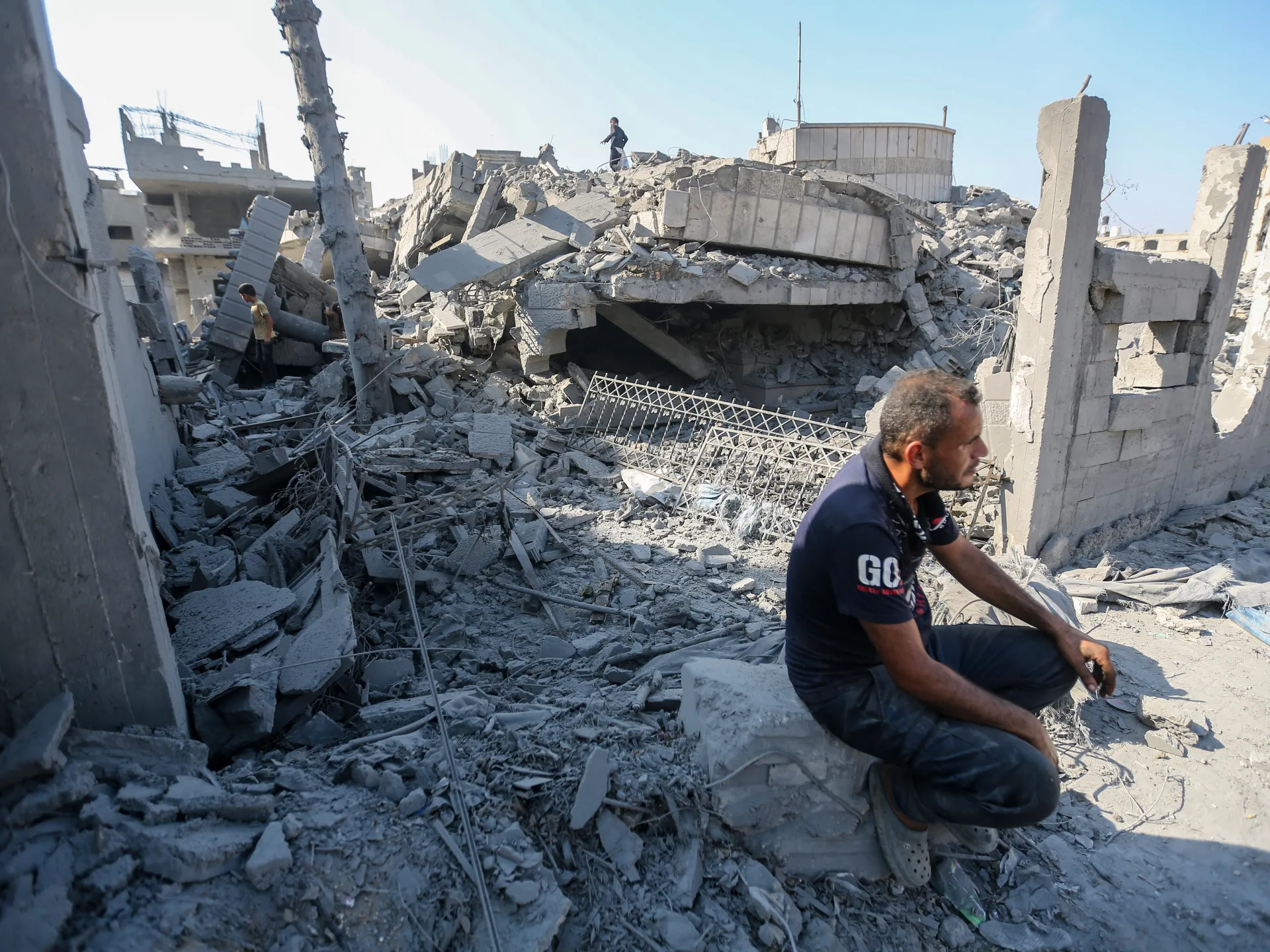
Continued Conflict and Civilian Casualties in Gaza
Recent days have seen a significant escalation of Israeli military actions in the Gaza Strip, occurring shortly after the announcement of a United States-brokered agreement aimed at disarming Hamas and other armed factions. This deal, presented by U.S. President Donald Trump on July 30, was framed as a crucial step into the second phase of the October 2025 "ceasefire" accord, with oversight from the Board of Peace, established for Gaza's post-conflict reconstruction and governance.
However, the proposed agreement faced immediate challenges. Hamas negotiator Ghazi Hamad indicated that the group would not comply with disarmament until Israel fulfilled its own commitments, including a halt to attacks and troop withdrawal. Conversely, a spokesperson for Israeli Prime Minister Benjamin Netanyahu’s office stated that Israeli forces would remain until Hamas was fully disarmed. This fundamental disagreement has resulted in a continued cycle of violence, with Israeli strikes on Gaza reportedly intensifying.
Within days of the disarmament deal's announcement, Israeli strikes claimed the lives of at least 19 Palestinians in a single day, contributing to a weekend death toll of 26. Nickolay Mladenov, an envoy for the Board of Peace, issued a condemnation of the escalation, noting, “Two days of strikes across Gaza have killed civilians and destroyed medical supplies that people depend on,” without directly attributing blame to Israel. These attacks concluded what was identified as the deadliest month in Gaza this year, and for Palestinians in the occupied West Bank, the deadliest in terms of Israeli settler attacks since 2023.
Devastating Impact on Civilian Lives and Infrastructure
The recent strikes have had a particularly severe impact on civilian populations. On Sunday, several families were killed in their homes. In Gaza City's al-Sousi Tower, a strike resulted in the deaths of Abdullah Abu Taif, 33, his pregnant wife, Abeer Anan, 29, and their five-year-old son, Azzam. Medical personnel at al-Shifa Hospital reportedly recovered the remains of an unborn child from the debris. Similar incidents occurred in al-Qarara, near Khan Younis, where Mahmoud al-Hams, 38, his wife Fatima, 37, and their young daughter were killed, with three others wounded. Near Deir el-Balah, an elderly couple, Kamal and Huda Abu Muailiq, aged 68 and 59, also died in their residence. Two brothers on a motorbike were killed in a separate strike in the same vicinity.
Later that evening, a strike on a tent housing displaced individuals in Gaza City’s Remal neighborhood killed two people, including a child. Four additional fatalities occurred in the same neighborhood when a drone struck a vehicle near the Sharia Court, an attack Israel claimed targeted military operatives.
Critical infrastructure has also been affected. An overnight strike on Saturday destroyed the medicine warehouse connected to Al-Aqsa Hospital in Deir el-Balah, obliterating two of four storage facilities and causing severe damage to two others. The Israeli military stated it had targeted a Hamas weapons depot adjacent to the hospital, one of five such sites it reported striking that night. Munir al-Bursh, Director-General of Gaza's Ministry of Health, criticized the strike, asserting it “turns medicine and illness itself into a tool of war.”
The Health Ministry reported that July was Gaza's deadliest month this year, with 152 fatalities. By August 3, the cumulative death toll since the October 2025 “ceasefire” had reached 1,250, with over 4,100 wounded. On August 1, Gaza’s Civil Defence concluded a two-week search of a demolished home in the Sabra neighborhood, recovering 112 bodies, 40 of which were children. Approximately 157 individuals remain missing from that site, with some reportedly fused into concrete due to the force of the explosions. Thousands of bodies are still believed to be trapped beneath rubble across Gaza.
Further incidents included the death of one-year-old Zaid Nofal in the Bureij refugee camp due to a strike on his family’s home, and the killing of eight-year-old Ratil Abdullah and 20-year-old Abdullah al-Balawi in Khan Younis by an Israeli drone strike on a tent. Israeli forces also expanded the “Yellow Line,” marking Israeli-occupied Gaza, by placing new concrete barriers on Salah al-Din Street, Gaza’s primary north-south route, near Shujayea, thereby restricting access for displaced families.
Surge in West Bank Settler Violence and Land Seizures
The West Bank has also experienced a significant increase in violence. The United Nations Office for the Coordination of Humanitarian Affairs (OCHA) reported that July, along with March, was the deadliest month for Palestinians in incidents involving settlers since October 2023. OCHA documented over 1,380 settler-related incidents across the West Bank since the beginning of 2026, averaging 6.6 per day. Demolitions and settler violence have led to the displacement of an average of 17 people daily this year, double the rate of the preceding three years.
A report by the Palestinian National Bureau for Defending Land and Resisting Colonization highlighted that no soldier from Israel’s settler-heavy “Hagmar” defense units has been arrested for killing a Palestinian since at least 2017, and over 93 percent of investigations into settler attacks have been closed without indictment.
Incidents of violence include settlers, escorted by Israeli soldiers and armored vehicles, traversing through Tal in the Nablus area, a week after four Palestinians and two Israelis were killed there. On July 31, a 10-year-old boy was shot in the back near al-Mughayyir, leading to the arrest of an off-duty soldier, a settler, on suspicion of the shooting. Days later, Issam Radwan, 71, and his wife Nahil, 65, were attacked on their farmland near Beitillu, sustaining severe injuries. In Idhna, armed settlers from a nearby outpost attacked a Palestinian home, with soldiers subsequently firing tear gas at residents who attempted to assist the family.
Throughout the week, new illegal outposts were established by settlers. While closures across the West Bank eased slightly, the town of Sinjil, north of Ramallah, and its approximately 8,000 residents entered a third week under closure, with its main entrance blocked by earth mounds and metal barriers.
Land seizures have paralleled the violence. In the Jenin governorate, Israeli authorities issued orders to seize approximately 200 dunums (0.2 square kilometers) of land, some for military roads spanning over 11 km to serve government-approved outpost networks. In the northern West Bank, Israeli NGO Kerem Navot documented military orders seizing Palestinian Authority-administered land in Area A, not for security, but to connect two new illegal settlements, Noa and Emek Dotan, ahead of incoming Israeli families.
In Masafer Yatta, an Israeli court dismissed petitions against the demolition of the Zif secondary girls’ school, serving 251 students, and three homes in Khirbet al-Mafqara, allowing for their potential demolition at any time. International reactions include Global Affairs Canada's statement that settlements are “illegal under international law,” to which Israeli officials responded by accusing Ottawa of “emboldening terror.” The UN’s rights office also expressed alarm regarding Israeli plans for further settlement expansion.