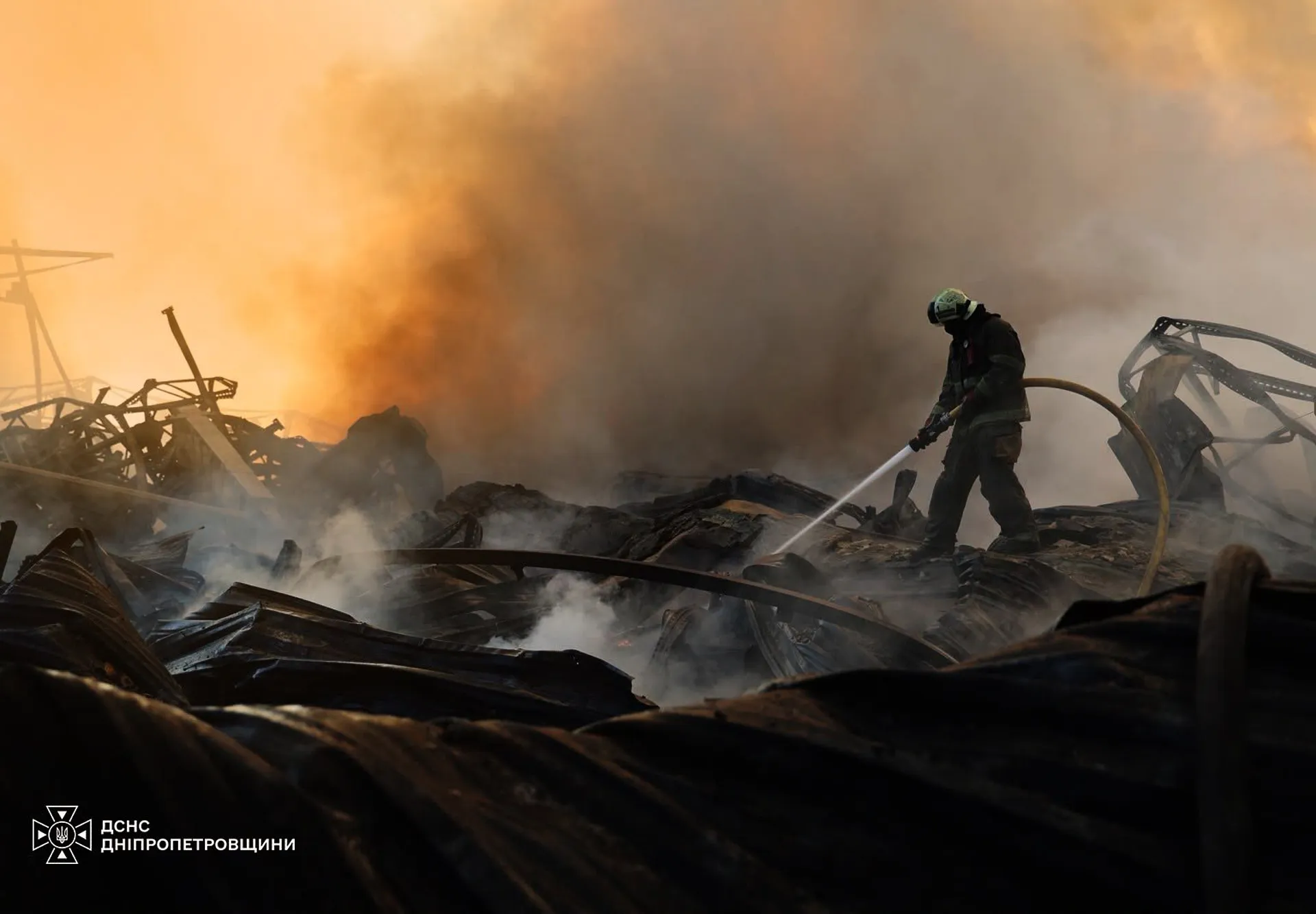
Civilian Casualties Mount Amid Cross-Border Attacks
Recent long-range missile and drone attacks have led to an increasing number of civilian fatalities in both Russia and Ukraine, according to reports from local authorities. These strikes, extending far beyond conventional battle lines, underscore a significant escalation in the ongoing conflict.
In Russia, a Ukrainian drone reportedly targeted a warehouse in the Moscow region, an incident that resulted in five deaths and ten injuries, as confirmed by regional Governor Andrei Vorobyov on Tuesday. This attack was one of three reported overnight strikes on warehouse facilities across Russia. Another warehouse belonging to the e-commerce giant Wildberries in the Tver region, located northwest of Moscow, was also reportedly hit by drones. Wildberries subsequently confirmed a fire at another of its warehouses near St. Petersburg following an attack.
Kyiv has previously alleged that Wildberries, identified as Russia's largest online retailer, plays a significant role in Moscow's military efforts by supplying 'dual-use' items that can serve both civilian and military purposes. In response to these concerns, the company reportedly banned smartphones for its employees on Monday, permitting only camera-free devices. This measure was ostensibly implemented to prevent the sharing of images or footage that Ukrainian authorities might analyze to enhance their ability to circumvent Russian air defenses near Wildberries' storage facilities. Additionally, the Syzran Oil Refinery in Russia's Samara region experienced an attack that triggered a fire.
Strikes Impact Ukrainian Cities and Maritime Operations
Concurrently, Russian strikes in Ukraine have also caused significant casualties. The northern city of Sumy was hit, resulting in the deaths of at least three individuals, including two children. In the southern Ukrainian port city of Mykolaiv, located near the Black Sea, an elderly woman was killed during an overnight attack. Furthermore, Russia's state-run news agency RIA reported that Russian forces targeted seven cargo vessels within Mykolaiv's port.
The broader impact of these long-range engagements was highlighted by Ukrainian President Volodymyr Zelenskyy on Monday. He indicated his intention to press his Russian counterpart, Vladimir Putin, to conclude the conflict before the onset of winter. However, Zelenskyy expressed reservations about the feasibility of this objective, accusing Putin of aiming to "continue dragging out" the war.
Ongoing Civilian Toll and International Concerns
The number of non-combatant deaths continues to rise in both nations. A previous incident on Monday saw seven people killed and over 50 injured when a Ukrainian drone struck a beach in Russia's southern Krasnodar region, near the city of Gelendzhik. Initial reports suggested the drone was intercepted, causing it to crash into the beach area. While Ukraine has not officially commented on this specific strike, it has consistently maintained that it does not deliberately target civilian infrastructure or populations.
Further incidents include the arrest of a soldier in the Russian-occupied Crimean Peninsula, who allegedly killed a colleague and three civilians in a rampage, as reported by Moscow-installed Governor Mikhail Razvozhayev. Investigations into the circumstances and causes of this incident are reportedly underway. In another development, a drone attack on a Turkish cargo ship in Russia's Black Sea port of Novorossiysk resulted in three serious injuries. All 22 crew members were evacuated following the incident, which was reported by Turkiye's maritime authority late on Monday. Turkiye has subsequently urged both Moscow and Kyiv to ensure safe passage in the Black Sea, expressing profound concern over the targeting of civilians in the region despite repeated warnings.
Broader Implications of Escalated Hostilities
The recent surge in long-range attacks signifies a concerning shift in the conflict, extending its reach and impact beyond the immediate front lines. The involvement of critical infrastructure, such as logistics hubs and energy facilities, suggests a strategy aimed at disrupting economic and logistical support systems. This expansion of targets inevitably increases the risk to civilian populations, who are increasingly caught in the crossfire of these intensified hostilities. The international community, including nations like Turkiye, continues to voice concerns over the safety of maritime routes and the protection of non-combatants, highlighting the urgent need for de-escalation and adherence to international humanitarian law. The ongoing cycle of retaliatory strikes threatens to further destabilize the region and prolong the human cost of the conflict, making the prospect of a swift resolution increasingly challenging.