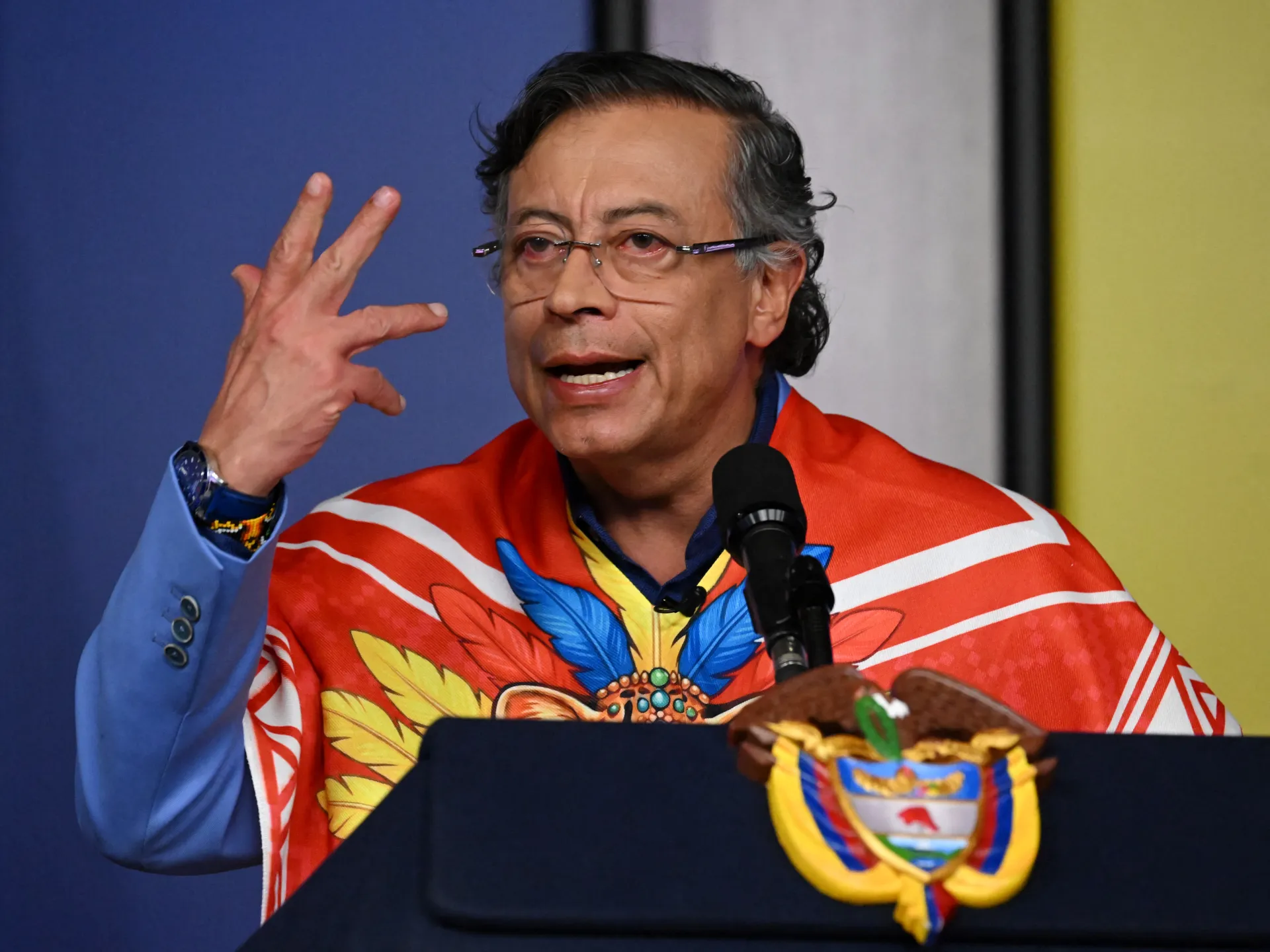
Outgoing Leader Questions Electoral Integrity
Gustavo Petro, the current president of Colombia, has reiterated accusations of electoral fraud concerning the presidential election held in June. These statements, made just days before he is slated to transfer power, challenge the legitimacy of the incoming right-wing president, Abelardo de la Espriella. Petro's allegations, delivered during a press conference in Bogota, suggest that election results were manipulated by programmers who altered numerous tally sheets after their transmission to the national election agency.
Petro characterized the election process as "obscure" and implied foreign interference, specifically noting the unavailability of metadata associated with vote tallies for scrutiny. Despite these assertions, both Colombian electoral bodies and international monitoring organizations have dismissed the claims of fraud. Election officials had previously confirmed in late June that de la Espriella, a conservative legal professional, secured victory over Petro's ally, Ivan Cepeda, by a margin of 250,000 votes. De la Espriella's inauguration before Congress is scheduled for the upcoming Friday.
Potential Impact on Political Landscape
Analysts suggest that these persistent allegations could potentially diminish the standing of the incoming president among certain segments of the electorate and exacerbate Colombia's existing political polarization. Petro, a former rebel combatant who made history in 2022 as the nation's first socialist president, is constitutionally prohibited from seeking a second term. His capacity to impede the power transition is limited, particularly after electoral judges officially certified the election outcomes.
Reflecting on the situation, Petro stated, "We are confronting a profound institutional challenge. And it is the inauguration of an illegitimate president."
Strained Relations with the United States
The final months of Petro's presidency were notably marked by recurring disagreements with then-US President Donald Trump. The Trump administration had actively fostered relationships with right-leaning governments in Latin America while exerting pressure on left-wing administrations in the region.
In October, Trump publicly labeled Petro an "illegal drug leader" and announced the cessation of US financial aid to Colombia. Petro responded by characterizing Trump as "rude and ignorant about Colombia." Subsequent events further escalated tensions. In January, following the abduction of Venezuelan President Nicolas Maduro by US forces in Caracas, Trump was questioned about the possibility of a military operation against Colombia. His response, "Sounds good to me," underscored the strained diplomatic ties.
Weeks later, US prosecutors initiated an investigation into potential connections between Petro and drug traffickers during his 2022 presidential campaign. Petro expressed concerns on Monday about the possibility of being "extracted" from Colombia once he assumes the role of an opposition leader. He has called for public protests and encouraged rural communities to establish "liberation guards."
"I've been advised to conduct myself appropriately," Petro remarked. "However, as a democrat, I cannot accept this electoral fraud."
Andres Macias, a political science professor at Externado University, commented that such calls could potentially "justify the use of weapons by civilians" in regions already grappling with conflicts involving the military, drug cartels, and various rebel factions. The implications of these ongoing disputes and the rhetoric surrounding the election results are significant for Colombia's immediate political future and its long-term stability.
The controversy surrounding the election results and the political discourse leading up to the presidential transition highlight a period of considerable tension in Colombian politics. The outgoing president's steadfast refusal to acknowledge the legitimacy of the election outcome, despite official certifications and rejections from international observers, creates an atmosphere of uncertainty. This situation is further complicated by the backdrop of challenging international relations, particularly with the United States, which saw a series of public confrontations and accusations during Petro's tenure. The calls for civilian action and the potential for increased polarization underscore the delicate state of the nation's political landscape as it prepares for a change in leadership. The incoming administration will likely face the immediate challenge of uniting a divided populace and rebuilding trust in democratic institutions, while also navigating complex foreign policy dynamics inherited from the previous government.