Arrest Made in Old Trails Fire Investigation
Law enforcement officials have announced the arrest of a man suspected of arson in relation to one of the major wildfires impacting the Spokane, Washington, area. Aaron Farinacci, 37, was taken into custody on Monday, facing charges of first-degree arson in connection with the Old Trails fire. He is currently being held on a $1 million bond. Spokane County Sheriff John Nowels informed reporters that a witness reportedly observed Farinacci kneeling in a grassy area believed to be the origin point of the blaze.
Widespread Devastation and Evacuations
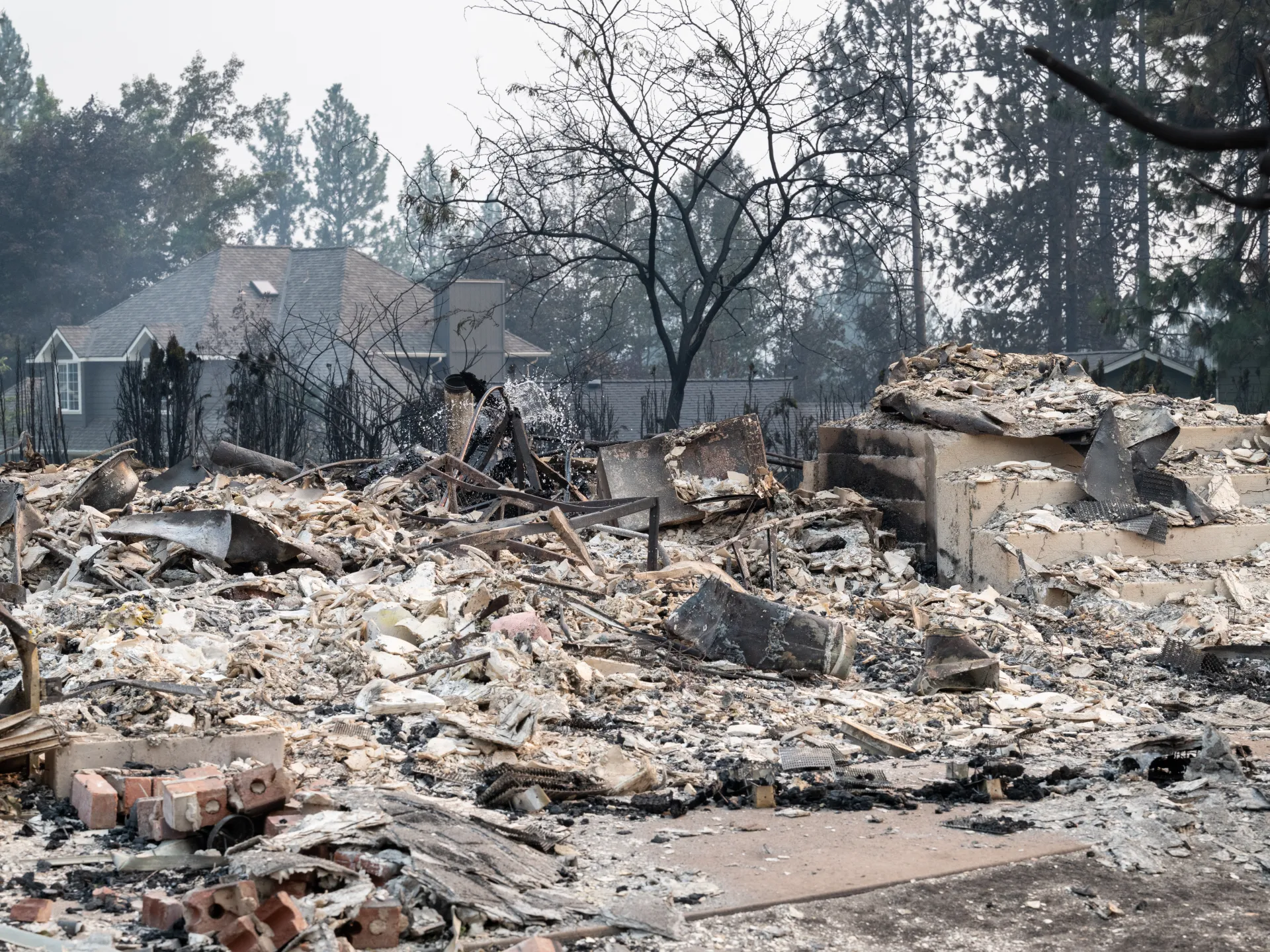
The arrest coincides with ongoing efforts by firefighters to contain multiple blazes that have devastated significant portions of land surrounding Spokane, a city with approximately 230,000 inhabitants situated near the Idaho border. According to InciWeb, the federal interagency fire information system, these fires have collectively consumed 8,026 acres (3,248 hectares). Initial aerial assessments suggest that between 700 and 1,110 structures have been destroyed since the fires ignited over the weekend. The conflagrations have necessitated the evacuation of an estimated 65,000 individuals.
As of the latest reports, no injuries have been confirmed. However, officials are actively attempting to establish contact with 14 individuals whose whereabouts remain unknown via mobile phone. Sheriff Nowels clarified that these individuals are not currently classified as missing persons.
Climate Factors Contributing to Wildfire Intensity
Scientists and climate experts frequently highlight the role of human-induced climate change in exacerbating the frequency and intensity of wildfires. This phenomenon is attributed to rising temperatures, prolonged periods of drought, and increasingly dry vegetation, which create conditions highly conducive to large-scale fires.
Daniel Swain, a climatologist at the University of California, Los Angeles, noted that eastern Washington experienced one of its warmest winters on record, leading to a significant snow drought. This lack of snowfall played a crucial role in preparing the landscape for the severe fire season currently underway. Swain commented during an online briefing, "This is a recurring pattern we’re seeing now over and over and over again, starting in the second decade of the 21st century, and now continuing essentially every year."
Global Impact of Extreme Weather Conditions
The challenges posed by extreme heat and wildfire conditions are not confined to the United States. Various regions across the globe are currently contending with similar environmental crises. In Japan, heat alerts remain in effect across broad areas, while South Korea recently recorded its highest temperature on record.
Wildfires have also prompted evacuations in parts of Greece and continue to pose threats to communities in Spain and France. Furthermore, in North Africa, firefighters have been engaged in battling substantial blazes across Tunisia, Algeria, and Morocco. These widespread incidents underscore a global trend of escalating extreme weather events, which are increasingly attributed to the broader impacts of climate change.