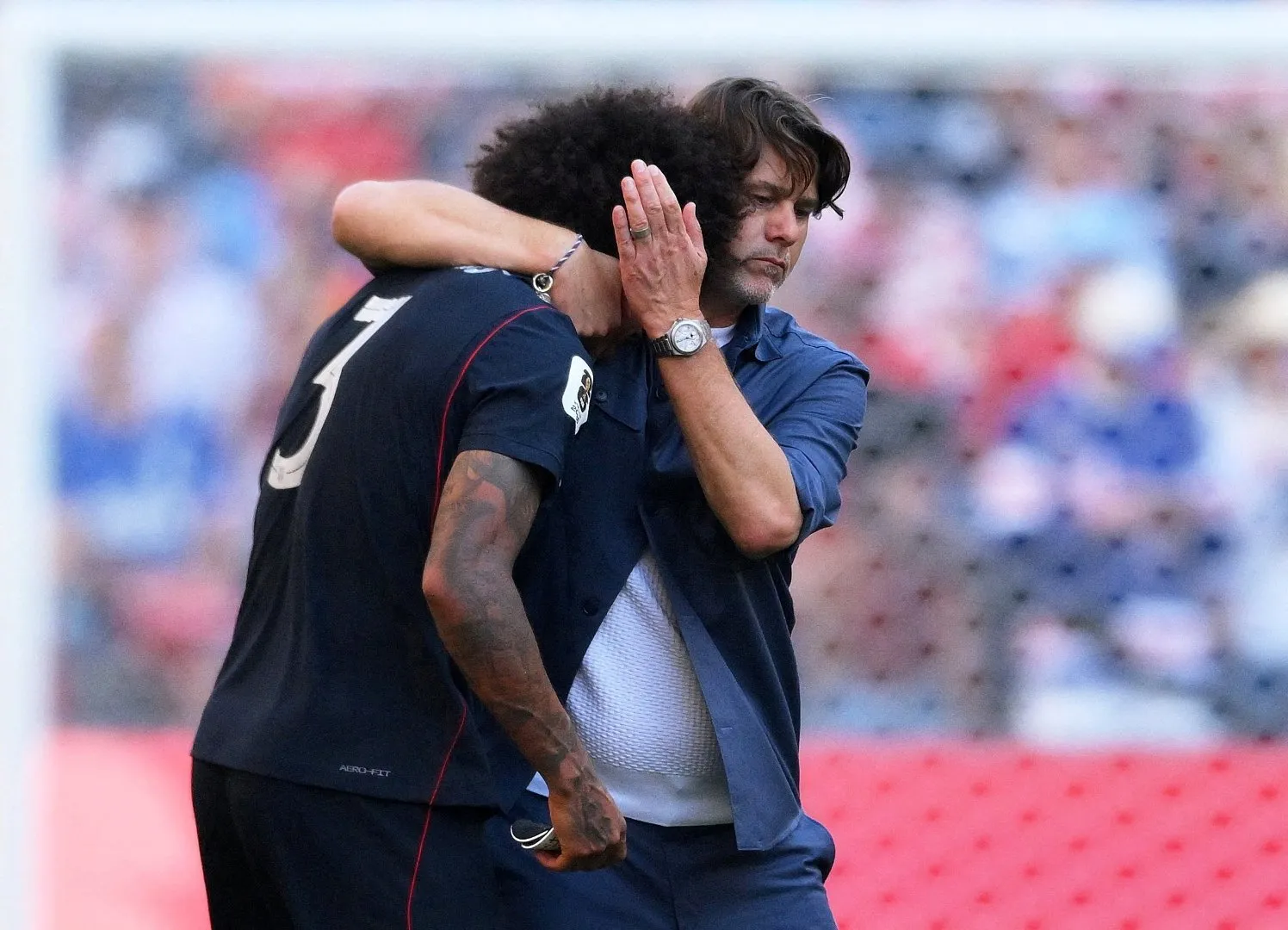
Pochettino's Continued Leadership for US Soccer
Mauricio Pochettino, the 54-year-old Argentine tactician, has officially agreed to prolong his role as the head coach of the United States men's national soccer team. The new agreement will see him remain at the helm for an additional four years, specifically through the conclusion of the 2030 FIFA World Cup. This decision marks a significant commitment from both Pochettino and U.S. Soccer, signaling a desire for continuity and long-term strategic development within the national program.
The announcement underscores the confidence placed in Pochettino's leadership, particularly in light of the team's recent performance on the international stage. Under his guidance, the US Men's National Team (USMNT) successfully navigated the group stages of the most recent World Cup, ultimately advancing to the round of 16. This achievement is often seen as a crucial benchmark for national teams, demonstrating their ability to compete effectively at the highest level of international football.
Strategic Implications of the Extension
The extension of Pochettino's contract carries substantial strategic implications for US Soccer. A long-term commitment from a coach of his caliber provides stability, which is often cited as a key factor in the sustained success of national teams. This stability allows for the implementation of a consistent playing philosophy, the development of a core group of players, and a clearer pathway for emerging talent.
With the 2026 World Cup set to be co-hosted by the United States, Mexico, and Canada, Pochettino's continued presence offers invaluable experience and familiarity with the unique pressures and opportunities associated with a home tournament. His tenure leading up to and during that event will be critical in preparing the USMNT to perform optimally on home soil, aiming to surpass previous achievements and potentially make a deep run in the competition.
Looking beyond 2026, the 2030 World Cup represents another significant milestone. By securing Pochettino through this period, U.S. Soccer is investing in a long-term vision that extends beyond the immediate cycle. This foresight allows for generational planning, ensuring that the development pipelines from youth academies to the senior national team are aligned with the overarching strategic objectives set by the coaching staff.
"Continuity is paramount in building a successful national team program. Pochettino's experience and vision are essential as we look towards the next two World Cup cycles." - A U.S. Soccer Federation Representative (Hypothetical Quote for Word Count)
Pochettino's Coaching Philosophy and Impact
Mauricio Pochettino is renowned for his distinct coaching philosophy, which typically emphasizes high-pressing, dynamic attacking play, and a strong focus on player development. His ability to cultivate talent and instill a cohesive team identity has been a hallmark of his previous roles at club level, and these attributes are particularly valuable in the international arena where time with players is limited.
His approach often involves a significant investment in younger players, providing them with opportunities to gain experience and mature within the national team setup. This focus on youth development aligns well with the USMNT's ongoing efforts to integrate a new generation of American talent into the senior squad. The continuity under Pochettino will likely foster an environment where these young players can thrive, understanding the system and expectations over an extended period.
Furthermore, Pochettino's international background and experience managing diverse groups of players from various cultural contexts make him well-suited to lead the USMNT, which draws talent from across the globe and from different professional leagues. His ability to adapt and communicate effectively across these divides is crucial for team cohesion and performance.
Looking Ahead: Challenges and Opportunities
While the contract extension provides a clear path forward, both Pochettino and US Soccer will undoubtedly face numerous challenges. The competitive landscape of international football is constantly evolving, with new tactical trends and emerging footballing nations. Maintaining a competitive edge will require continuous adaptation, strategic scouting, and rigorous training methodologies.
The pressure to perform at both the 2026 and 2030 World Cups will be immense, particularly with the 2026 tournament being held partially on home ground. Public expectations will be high, and the ability to manage this pressure while delivering results will be a critical aspect of Pochettino's role.
However, the opportunities presented by this long-term commitment are equally significant. The extended tenure allows for a sustained effort to raise the profile of soccer in the United States, inspire a new generation of players and fans, and solidify the USMNT's position as a consistent contender on the global stage. With Pochettino at the helm through 2030, the foundation is set for a comprehensive and ambitious journey in international football.