The Rise of a Revolutionary Figure
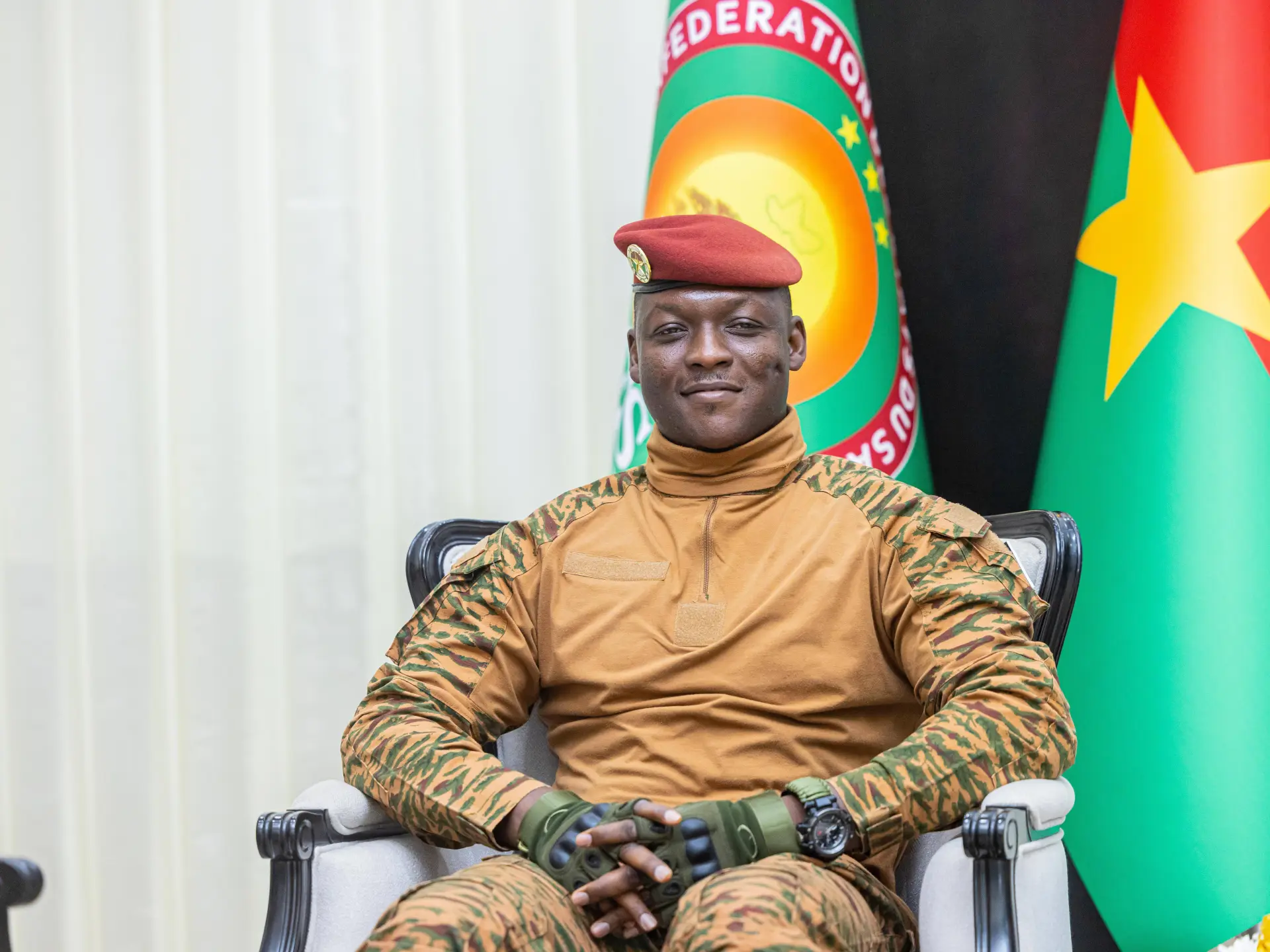
Captain Ibrahim Traore, who assumed power in Burkina Faso through a 2022 coup, has rapidly become a prominent figure in African politics. At 38 years old, he is celebrated by many as an emblem of national sovereignty and a bulwark against foreign influence. His message has resonated across the continent, tapping into a broader sentiment of frustration with external military involvement, economic dependency, and political elites perceived as out of touch. However, this growing international stature contrasts sharply with the domestic situation, where his administration has overseen increasing restrictions on political activities, ongoing insecurity, and questions about the long-term efficacy of his nationalist agenda.
In April, Traore explicitly stated that Burkinabe citizens should 'forget about democracy,' asserting that the nation was undergoing a revolutionary phase rather than a democratic one. This declaration followed his government's extension of military rule and the dissolution of political parties, signaling a clear shift away from an immediate return to civilian governance. Burkina Faso has been grappling with a severe security crisis for nearly a decade, with extremist groups linked to al-Qaeda and ISIL expanding their presence and overwhelming successive administrations.
The Appeal of Traore's Sovereignty Narrative
Traore's popularity extends beyond Burkina Faso's borders due to his adeptness at addressing widespread discontent across Africa. This discontent stems from a history of foreign military interventions, economic reliance on external powers, and a perception of political leaders being disconnected from their constituents. Since taking control in September 2022, Traore has taken decisive steps such as expelling French military forces, deepening ties with Russia, and advocating for local industries and agriculture. He has positioned economic self-reliance as a core national priority, aligning Burkina Faso with other military-led governments in the Sahel region that are reevaluating traditional Western security partnerships.
His public addresses frequently evoke the legacy of Thomas Sankara, Burkina Faso's revolutionary leader from 1983 to 1987, who remains an icon of anti-imperialism and self-sufficiency throughout Africa. Supporters contend that Traore has successfully rekindled national pride and challenged a system where Burkina Faso remained politically and economically beholden to external entities. Kabir Adamu, a security analyst and founder of Beacon Consulting Limited in Nigeria, observed that Traore's approach demonstrates a 'decoupling of legitimacy from performance,' where the focus has shifted to sovereignty rather than immediate efficacy. Measures such as the establishment of the Volunteers for the Defence of the Homeland, Burkina Faso's withdrawal from ECOWAS, and enhanced security cooperation with Russia have resonated with a population weary of years of foreign-backed military efforts that failed to curb the spread of armed groups. A Burkinabe diplomat, speaking anonymously, noted that Traore's appeal reflects a desire among some citizens for a leader who appears genuinely independent of external influences, viewing Western criticism as validation of Burkina Faso's pursuit of a more autonomous path.
Policy Shifts and Persistent Security Challenges
Traore's administration has endeavored to translate its sovereignty message into tangible policies, prioritizing domestic production, state control over key sectors, and reducing reliance on foreign partners. Officials report increased investment in agriculture, particularly staple crops like rice and maize, alongside efforts to foster local manufacturing and processing. The government has also promoted infrastructure projects and sought greater national involvement in strategic economic areas. These initiatives, according to supporters, are building blocks for greater economic independence, ensuring that national resources are directed toward internal development rather than external interests.
Furthermore, the government has expanded the Volunteers for the Defence of the Homeland program, a civilian force designed to support the military in regions where state authority has been compromised. Despite these efforts, security remains the ultimate test of Traore's presidency. He ascended to power with a pledge to reverse the deteriorating security situation that had plagued Burkina Faso for years, primarily driven by extremist groups linked to al-Qaeda and ISIL. While the military has intensified operations and frequently announced the recapture of strategic locations, government claims of improved security are met with skepticism.
Mustapha Bature Sallama, a private investigator and security specialist based near the Ghana–Burkina Faso border, highlighted that Burkina Faso continues to face significant threats from groups like Jama’at Nusrat al-Islam wal-Muslimin (JNIM) and ISIL’s West Africa Province (ISWAP). Millions remain in need of humanitarian aid, over two million are displaced, and independent verification of official security claims is scarce. Despite government assertions of progress, armed violence persists across multiple regions, civilians are regularly killed, and humanitarian organizations report widespread need. Access for journalists, researchers, and aid groups has become increasingly limited, hindering independent assessments.
Erosion of Political Freedoms and Religious Tensions
Beyond its military transition, Traore's government has steadily consolidated power. In January, political parties were dissolved, and political activities suspended, with authorities arguing these actions were necessary to prevent division during a national crisis. This move followed an earlier extension of military rule, effectively postponing a return to electoral politics. The tightening of state control has also extended into religious affairs. Last month, Traore publicly declared a 'battle' against Muslim scholars he accused of promoting religious extremism, following the adoption of a new Religious Freedoms Law and the arrest of several prominent Sunni clerics. This confrontation was particularly notable given that many Muslim leaders had previously been considered part of Traore's support base. Critics have warned that these measures risk undermining religious independence and freedom of expression, while authorities maintain that such extraordinary steps are essential during a national security emergency. Rights groups have also voiced concerns regarding restrictions placed on political parties, journalists, and civil society organizations.
Bridging the Gap Between Image and Reality
Traore's ascent is largely founded on a powerful message: that Burkina Faso should assert greater control over its security, resources, and political trajectory. For many of his adherents, he embodies a new generation of African leaders prepared to challenge former colonial powers, reject Western security paradigms, and demand greater national resource control. In a region increasingly frustrated with foreign intervention, this message has resonated profoundly. However, the strength of Traore's public image presents a critical challenge: whether these symbolic victories can translate into tangible improvements in the daily lives of Burkinabe citizens.
If assessed by sovereignty, political messaging, and the ability to inspire followers, Traore has achieved remarkable influence in a short period, becoming one of Africa's most recognizable political figures. However, when evaluated by internal security, humanitarian conditions, and political freedoms within Burkina Faso, the picture is considerably more complex. Armed violence persists, displacement remains widespread, and questions linger about the military government's capacity to deliver lasting stability. While Traore has proven highly effective at transforming sovereignty into a compelling political message, the crucial question now is whether this message can ultimately provide the security and justice that many Burkinabe people anticipate. As one youth leader in Ouagadougou anonymously stated, 'We are proud to see a leader who stands up to the West and wears our traditional clothes. That pride is real. But pride doesn’t feed a family, and it doesn’t protect a village. We want Captain Traore to be a symbol of strength, but we also need him to be a symbol of safety and justice here at home.'