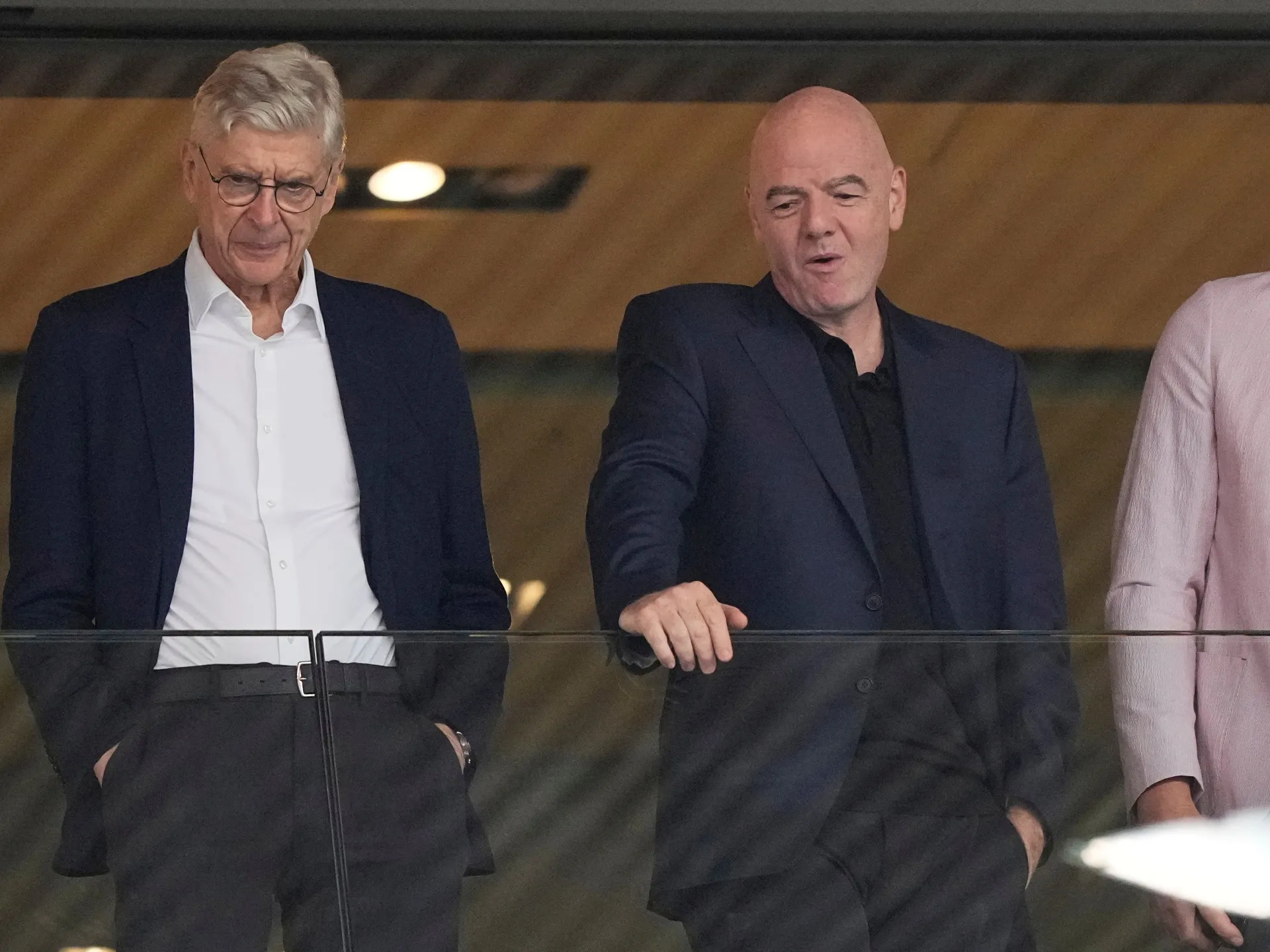
Wenger Unaware of Infantino's Controversial Commercial Strategy
Arsène Wenger, the former manager of Arsenal and current FIFA Chief of Global Football Development, has publicly stated his lack of involvement and prior knowledge concerning President Gianni Infantino's recently withdrawn plan to sell equity stakes in future World Cup profits to private investors. Wenger's comments emerged amidst a significant controversy that led to the abrupt cancellation of the proposal, which had faced widespread opposition from global football organizations.
In a statement released on Tuesday, Wenger articulated his support for the decision to abandon the commercial initiative, emphasizing that its withdrawal was “absolutely necessary.” He underscored his belief in FIFA’s role as an independent entity dedicated to serving the sport with integrity, transparency, and commitment. This declaration followed a period of intense scrutiny and a legal preservation letter reportedly sent to FIFA by UEFA, European football's governing body, which Al Jazeera confirmed.
The Associated Press indicated that a letter from UEFA's legal representatives named Wenger among 18 executives whose data and communications should be preserved as potential evidence, suggesting the gravity of the dispute. Wenger, however, maintained his distance from the core of the plan, which he stated he only learned about through media coverage. "I was not involved in this strategic plan and first became aware of the project through media reports," Wenger affirmed, without directly naming President Infantino in his statement.
The Proposed FIFA Forward Enterprise (FFE) and Its Rejection
Infantino’s ambitious $20 billion proposal aimed to establish a new subsidiary, provisionally named FIFA Forward Enterprise (FFE). This entity would have been tasked with managing FIFA's revenue-generating operations, including the organization of major tournaments like the World Cup, as well as the sale of broadcasting rights, sponsorship opportunities, and event tickets. The core of the plan involved raising approximately $4.2 billion from external investors by offering stakes representing about 20 percent of FFE, based on an estimated equity valuation of $20 billion.
Reports suggested that Thrive Eternal, an investment firm co-founded by Joshua Kushner, whose brother Jared Kushner is the son-in-law of former United States President Donald Trump, was slated to be the “anchor investor” in this venture. The initiative faced immediate and strong backlash from various football stakeholders, most notably UEFA, which reportedly threatened a boycott of all FIFA-sanctioned events if the plan proceeded. This widespread condemnation ultimately led to Infantino’s decision to withdraw the proposal early on a Saturday, following a week of intense debate and controversy within the global football community.
The plan also included incentives for FIFA's 211 member federations, which are essentially the owners of the non-profit organization under Swiss law. Each federation was offered $20 million, with a deadline of September 19 to accept. Furthermore, Infantino had promised to double their FIFA funding for the 2023-2030 period, increasing it from the previously announced $10 million to $20 million. These financial inducements were presented just a week after the conclusion of the highly successful World Cup in North America on July 19, which significantly boosted FIFA’s revenues to $15 billion for the 2023-2026 commercial cycle—nearly double the income generated from the 2022 World Cup in Qatar.
Wenger's Role within FIFA
Wenger, who was appointed by Infantino in 2019, clarified that his responsibilities within FIFA are primarily focused on the developmental aspects of the sport. His duties include overseeing the analysis of game data, managing the FIFA online training center, and fostering youth education through the establishment of 60 academies in areas where they are most needed. Additionally, he is involved in developing youth competitions globally. His statement serves to delineate his operational scope from the commercial strategy that recently caused such significant upheaval.
The episode highlights ongoing tensions and differing philosophies within FIFA regarding its commercial operations and the future direction of global football governance. The swift rejection of the FFE proposal underscores the power of collective opposition from major footballing bodies and the importance of maintaining FIFA's perceived independence and commitment to the sport's foundational principles.